Before getting into explaining my research and the writing process, I thought it might be interesting for folks to hear a little about what I’ve done to get up to this point. The dissertation is the last step of a lengthy process.
First, I completed two years of course work in the history department at Fordham. I took 3 classes a semester that met once a week for about 2.5 hours. We sat around a conference table or circled the classroom desks and discussed the readings with a small group of certified history heads. I learned an incredible amount by listening. I also practiced how to engage in scholarly discussions with people I didn’t always agree with, but I respected.
While I worked through my courses, I assisted Dr. Naison with the Bronx African American History Project (BAAHP). I lucked out with this placement. Not only is Dr. Naison incredibly knowledgeable about African American history and culture, but he’s just generally a fun, positive person to be around. He’s also always eager to share new music and explain the history behind the style: Tito Puente, The Chords, Sly and the Family Stone, Fela Kuti, Kurtis Blow, the Wu-Tang Clan… Dr. Naison’s influence is all over my Spotify account.

Notorious PhD/Mark Naison 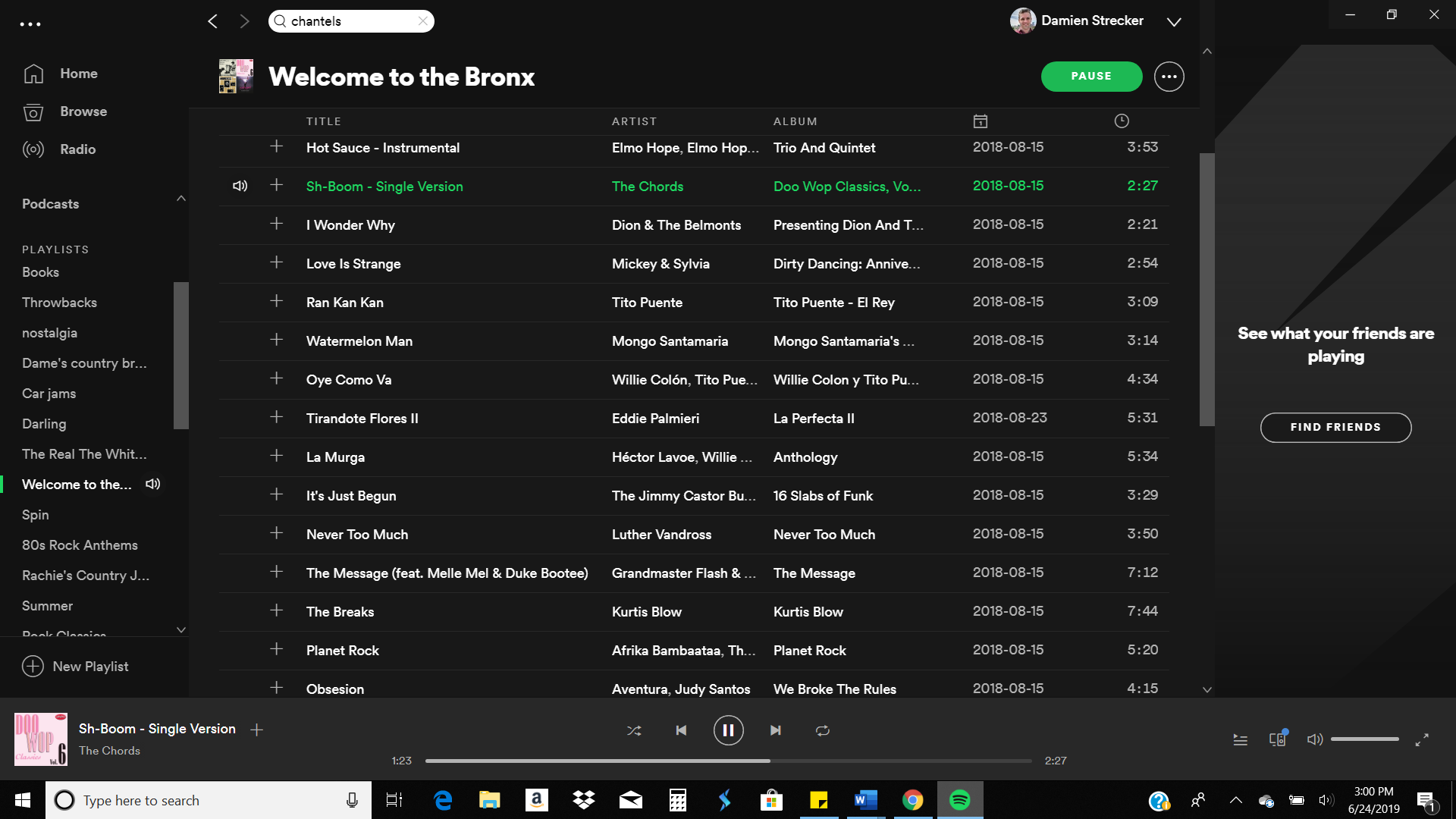
Dr. Naison fundraised and corralled resources from Fordham to make the BAAHP one of the strongest and longest running oral history projects in the nation. The BAAHP archive houses around 300 interviews of Bronx residents from the 1940s until today. I led a team of undergraduates in transcribing, digitizing, and uploading interviews to Fordham library’s servers. I also helped record new interviews. Dr. Naison ordered a load of food, invited historians from the community, and conversated with the interviewee about life and culture in the Bronx. The stories that emerged helped change the narrative of Bronx history. Dr. Naison and Bob Gumbs published a book through Fordham University Press titled Before the Fires that captures the essence of African American life in the Bronx before widespread 1970s divestment and arson.
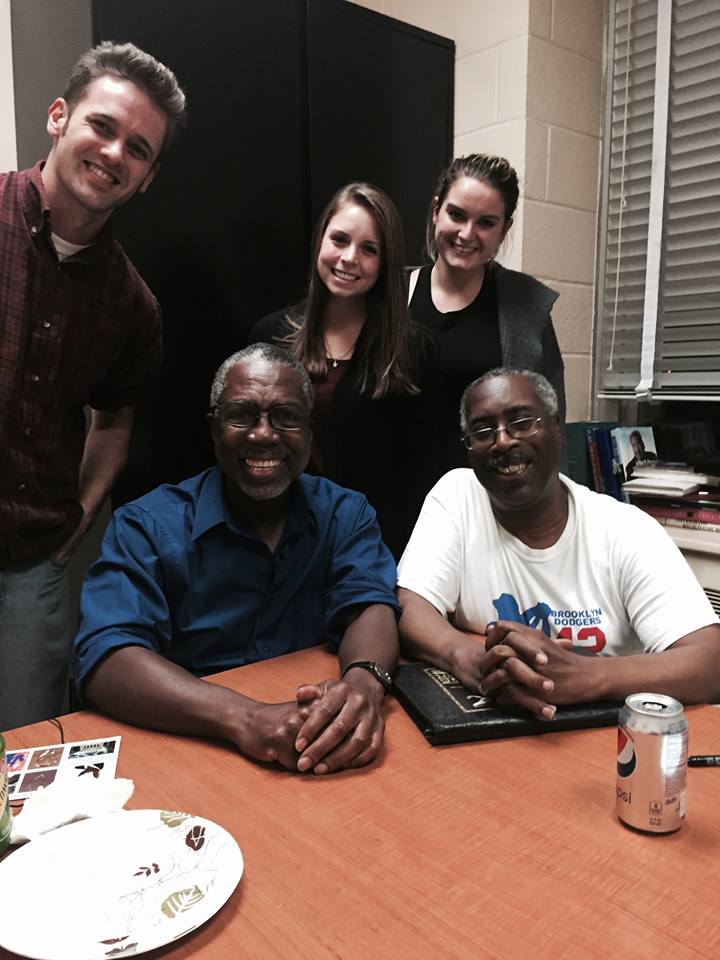
Me, Mario Sprouse, Andrea Benintendi, Morgan Mungerson, Bob Gumbs 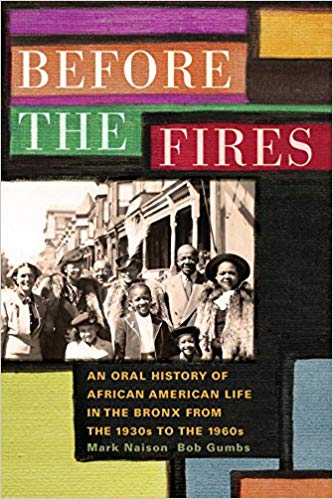
I’m thankful for my time with the BAAHP, but I also enjoyed the transition to Teaching Fellow at Fordham. I missed having my own students and being in front of the classroom. I taught a course titled, Understanding Historical Change: American History. The department gave me total freedom in constructing a syllabus, choosing my topics, and assigning readings. Coming from a public-school environment in which I solely taught district and state approved curriculum, this new flexibility was something I really appreciated.
While I taught, I also independently studied Spanish and French. Fordham requires reading proficiency in two foreign languages. I passed my Spanish language exam fairly quickly, but the French turned into an albatross. I spent 8 hours a day studying vocab, conjugations, and grammar. I could read on a newspaper reading level, but my French translation exams were based on very difficult academic articles. They would have been confusing to understand in English. I had an extra level of frustration because none of the language I was studying had anything to do with the research I hoped to do. Thankfully, all that is behind me…
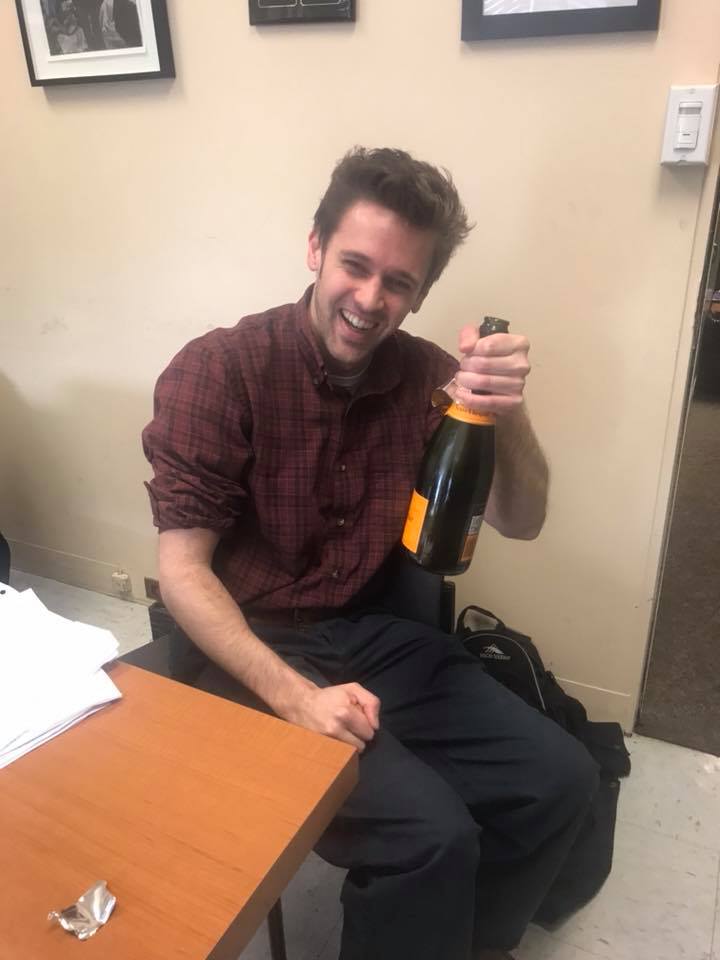
After passing my language exams, I concentrated on comprehensive exams. I chose four professors who specialize in different areas of history and collaborated to compile a series of reading lists. My final book tally was around 220. After spending about a year and half frantically reading, my committee of professors tested me on my historical content knowledge. Failing these exams can mean the end of the road for your academic career so it’s very high stress. Any time I wasn’t teaching or working a shift at the coffee shop, I read. Any time I did not read, I felt a strong impulse that I needed to be reading. I summarized the books into seven notebooks and summarized my notebooks into a series of notecards. Two weeks before my exam, I spent countless hours on Skype with my dad talking through the main points of each book (shout outs to mom for taking over when dad had bowling league nights). A few days before the exam, I started to lose my appetite and had a really hard time sleeping. The day of the exam, Dr. Naison kindly offered some of his chicken wings before we began. I politely declined. After answering all their questions the best I could, I exited the room for them to privately evaluate my performance. They called me back in and congratulated me on passing. Dr. Naison broke out some champagne for everyone, and that night I slept in a deep, deep slumber.

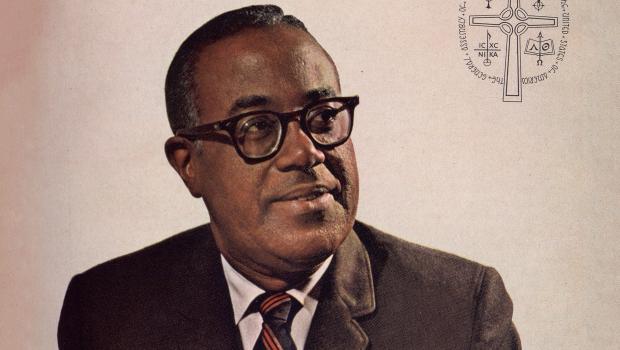
After the smoke cleared from my comprehensive exams, I met with Dr. Naison to discuss dissertation ideas. I had a few topics kicking around in my head, but he offered a great option. During his time working on the BAAHP, many interviewees mentioned the influence of a South Bronx pastor named Edler Hawkins. Dr. Naison urged me to do biographical work on his life with a special emphasis on his local Bronx and greater New York influence. It’s turned out to be an incredibly rewarding and interesting topic. In my next post, I’ll give some background info on Hawkins, walk you through some of the places I’ve been while doing research, and give you some preliminary research findings.
 History Heads
Very cool! Great summary, interesting and well written! I look forward to the next post!
Thanks! Chris ________________________________
LikeLike
thank you kind sir.
LikeLike